

May 13, 2026
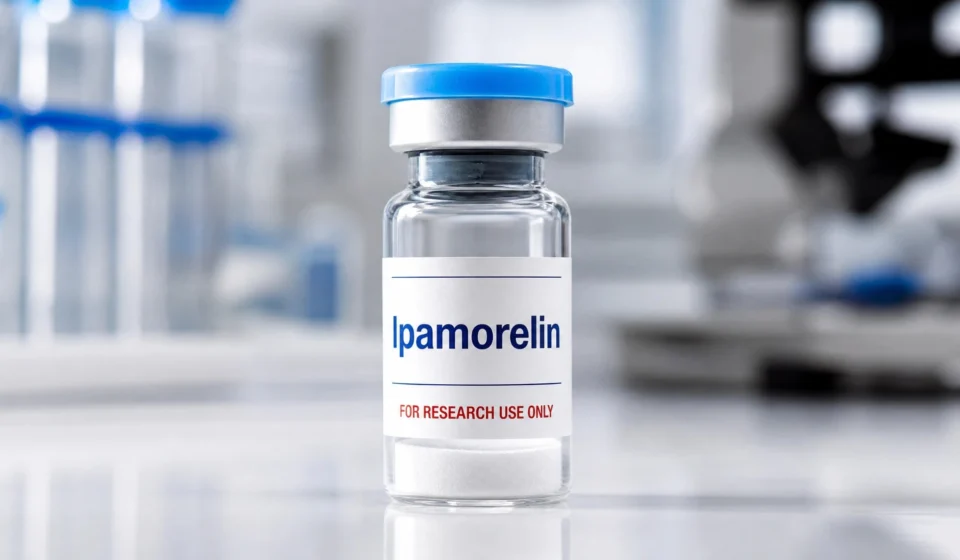
Ipamorelin is a synthetic pentapeptide ($Aib-His-D-2-Nal-D-Phe-Lys-NH_2$) that research indicates is one of the most selective growth hormone secretagogues (GHS) currently identified. Unlike earlier generations of growth hormone-releasing peptides, Ipamorelin is notable for its “clean” profile—stimulating growth hormone (GH) release without significant cross-reactivity with other pituitary hormones. Extensive preclinical studies utilizing animal models have indicated the potential efficacy of Ipamorelin in promoting systemic growth and repair while maintaining physiological hormonal balance.(1)
What is the mechanism by which Ipamorelin exerts its effects?
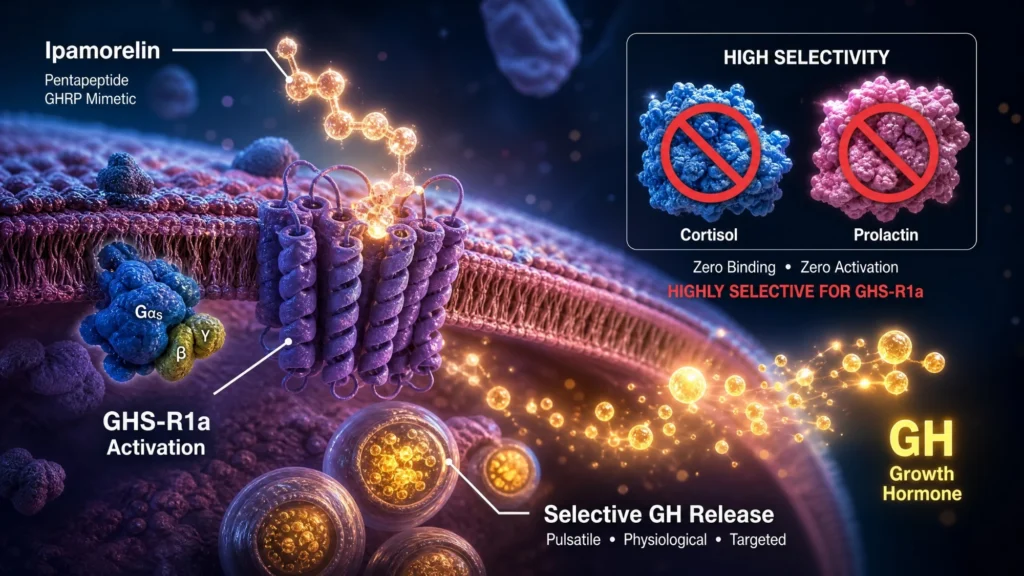
The mechanism underlying Ipamorelin’s proposed biological action involves its potential to interact with the ghrelin receptor (GHS-R1a) in the anterior pituitary gland and the hypothalamus. Upon presentation, Ipamorelin appears to bind to these receptors, potentially triggering a pulsatile release of endogenous growth hormone. This interaction appears to cause an increase in intracellular calcium signaling, which is considered crucial for the exocytosis of GH from somatotroph cells.
Recent investigations suggest that Ipamorelin’s high degree of selectivity sets it apart from GHRP-2 and GHRP-6. Studies suggest that Ipamorelin does not significantly stimulate the release of adrenocorticotropic hormone (ACTH), cortisol, or prolactin, even at high dosages. Furthermore, Ipamorelin is believed to act as a potent mimetic of ghrelin, but without the intense hunger-stimulating effects typically associated with native ghrelin, making it a unique tool for studying growth signaling in research models.(1) (2)
How was the Ipamorelin peptide discovered?
The discovery of Ipamorelin was the result of refined medicinal chemistry aimed at improving the specificity of growth hormone secretagogues. Researchers at Novo Nordisk made significant strides in the late 1990s by screening various peptide sequences for GH-releasing activity that lacked the side effects seen in first-generation secretagogues.
In their investigations, the team identified that the specific pentapeptide structure of Ipamorelin provided an optimal balance of potency and selectivity. Specifically, the inclusion of 2-naphthylalanine and aminoisobutyric acid appeared to protect the peptide from rapid enzymatic degradation while ensuring high affinity for the GHS-R1a. Building upon these findings, Ipamorelin was established as a primary candidate for studying long-term pituitary stimulation and the regulation of metabolic homeostasis without disrupting the hypothalamic-pituitary-adrenal (HPA) axis.(3)
Research Studies on Ipamorelin Peptide
Ipamorelin Peptide and Bone Mineral Density
The role of Ipamorelin in skeletal homeostasis was investigated to elucidate its potential to mitigate the effects of bone loss. Using rodent models of osteoporosis, the impact of Ipamorelin was evaluated on bone mineral density (BMD) and cortical bone thickness. This study suggested that Ipamorelin may significantly increase bone formation markers compared to findings yielded by the control group. Histological analyses revealed that upon Ipamorelin introduction, it may potentially yield an increase in osteoblast activity and probably result in improved skeletal strength. Mechanistically, Ipamorelin appears to activate the GH/IGF-1 axis, potentially promoting the restoration of bone architecture.(4)
Ipamorelin Peptide and Gastrointestinal Motility
This study aimed to investigate the role of Ipamorelin as a modulator of gastric emptying and bowel function. Results indicate that Ipamorelin potentially interacts with ghrelin receptors in the enteric nervous system, resulting in potential positive regulation of gastrointestinal motility in postoperative models. In vitro experiments suggest that the peptide may play a role in accelerating transit time without causing significant systemic distress, as indicated by potential differential regulation of smooth muscle contractions. Research further suggests that in damaged axis models, the influence of Ipamorelin may synergistically improve nutrient absorption and potentially reduce recovery times. Researchers state that “Ipamorelin, as a selective secretagogue, disrupted the progression of gastric stasis and activated intrinsic motility pathways in vivo.”(5)
Synopsis
The Ipamorelin peptide appears to be a promising modulator of growth hormone signaling and metabolic repair pathways. By selectively activating the GHS-R1a and disrupting the negative effects of hormonal decline without impacting cortisol or prolactin, Ipamorelin appears to stimulate the body’s innate growth mechanisms, potentially leading to enhanced cellular responses and improved tissue quality in research models. Studies have suggested its potential in treating bone fragility and investigating the molecular biology of muscle maintenance. Further investigations are warranted to fully elucidate its underlying mechanisms and evaluate its applications in scientific research.
NOTE: These products are intended for laboratory research use only. This peptide is not intended for personal use. Please review and adhere to our Terms and Conditions before ordering.
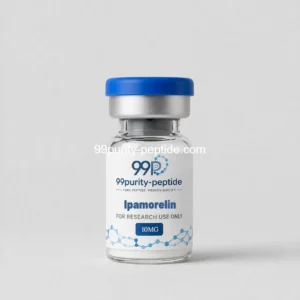
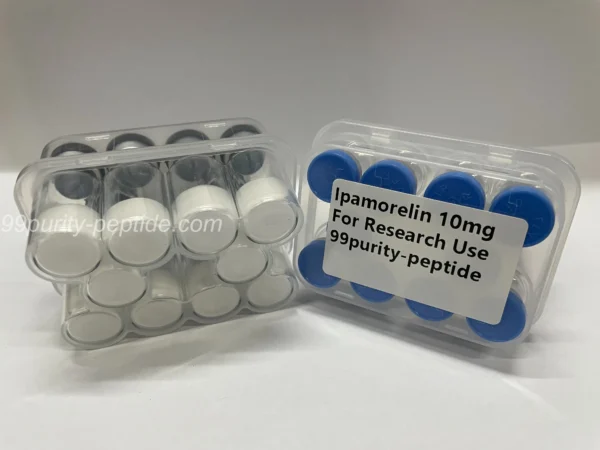
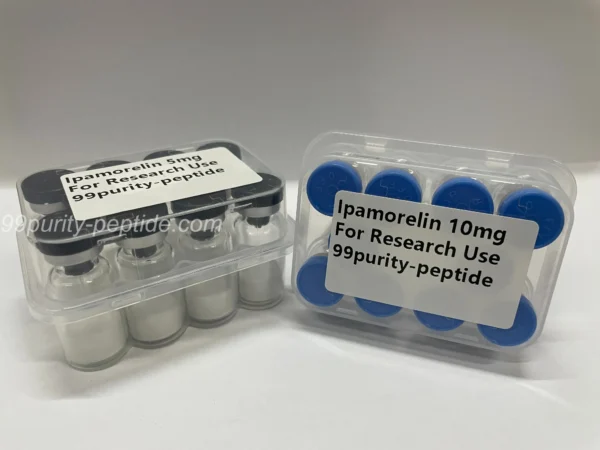
Ipamorelin 10mg – Selective GHS-R Agonism & Pituitary Signaling Research
A highly selective GHRP (Growth Hormone Releasing Peptide). Optimized for laboratory research into natural GH pulsatility, skeletal muscle tone, and sleep-cycle-related metabolic recovery.